AI Security Tools for Developers: SAST, IaC, and Secrets Scanning in 2026
AI generates 46% of new code globally, and that code has 2.74x more vulnerabilities. Here's what SAST, IaC scanning, and secrets scanning actually do, and which tools are worth using.

AI coding tools now generate 46% of all new code globally. That number is heading toward 60% by the end of 2026, according to Gartner. The problem: AI-generated code has 2.74x higher vulnerability rates than human-written code, and the volume is moving faster than any security team can review manually.
This is not a future risk. In January 2026, a founder built an AI social network without writing a line of code himself. Within 72 hours of launch, 1.5 million API authentication tokens and 35,000 email addresses were exposed. In March 2026, Amazon's internal 80% AI code mandate contributed to a 6-hour outage affecting 6.3 million orders. Meanwhile, GitGuardian found 29 million hardcoded secrets exposed in public GitHub repositories in 2025 alone: a 34% year-over-year increase, the largest single-year jump ever recorded.
The security tooling category has responded. AI-powered SAST, IaC scanning, and secrets detection have all changed meaningfully in the past 12 months. This piece explains how each discipline works, what the leading tools actually do differently, and how to build a layered defense that keeps pace with machine-speed code generation.
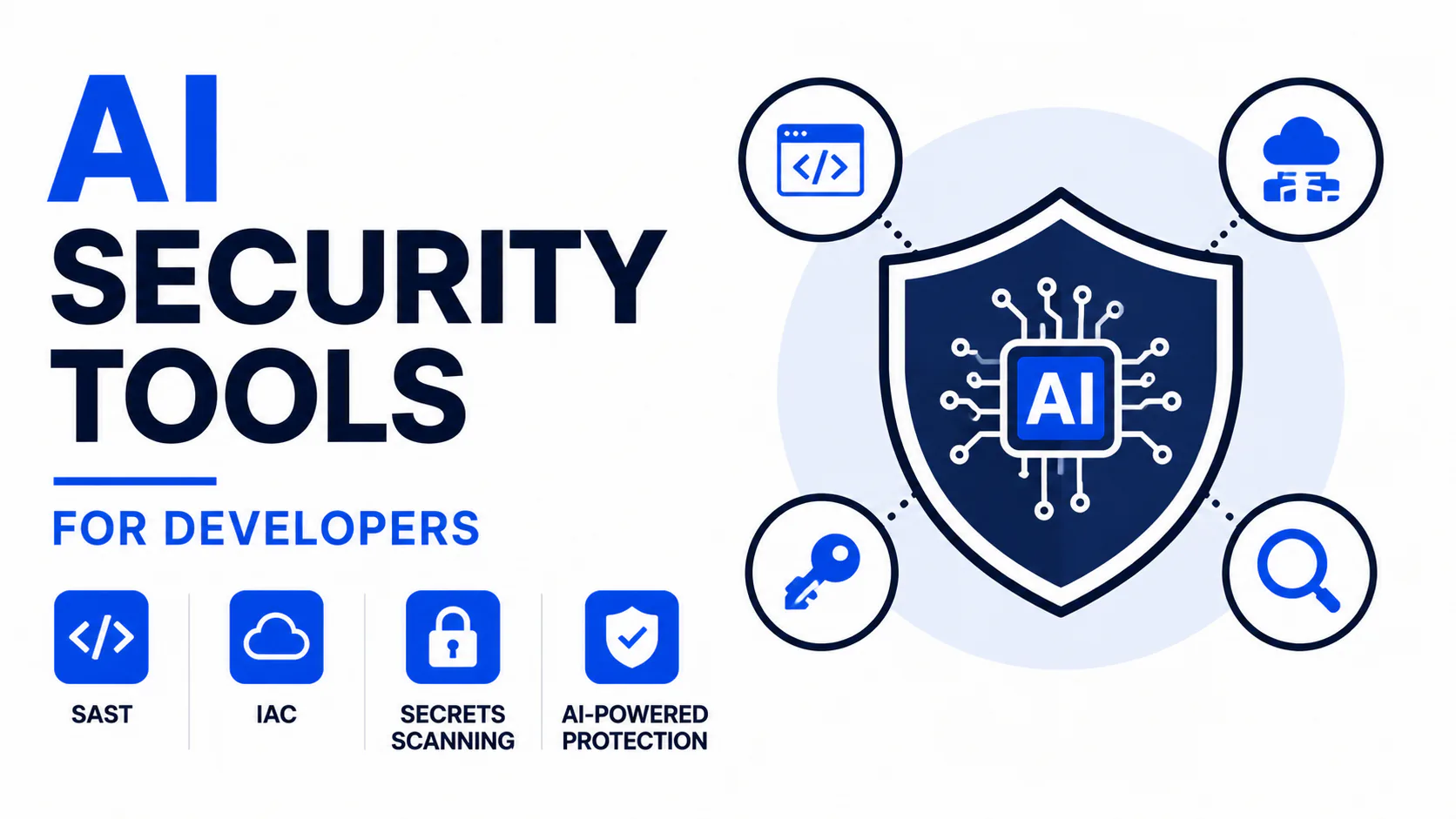
Scope: This covers three foundational DevSecOps disciplines: SAST (Static Application Security Testing), IaC (Infrastructure as Code) security scanning, and secrets detection. Each addresses a distinct part of the software supply chain. Used together, they form the automated security layer that AI-accelerated development requires.
Why AI-generated code broke the old security model
The premise of previous-generation security tooling was that developers write code at human speed, occasionally make mistakes, and security teams catch those mistakes through periodic scans and manual review. The volume was manageable.
That model is broken. By June 2025, AI-generated code was adding more than 10,000 new security findings per month across studied repositories: a 10x jump from December 2024. No team of human reviewers can triage that volume. Automated tooling has shifted from enhancement to prerequisite.
The failure modes in AI-generated code are also structurally different from human errors. AI models optimize for code that works, not code that is secure. They default to familiar patterns from training data (which often includes legacy, insecure code), miss non-functional requirements like row-level security, and hallucinate package names that do not exist, creating supply chain attack vectors. The result: 25.1% of AI-generated code samples contain confirmed vulnerabilities against the OWASP Top 10, and AI-generated repositories show a 6.4% secret leakage rate, higher than traditional projects.
The economic case for automated tooling is not subtle. IBM research puts the average cost of a credential-related breach at $4.88 million. IBM also found that fixing a bug in production costs 100x more than catching it in development. In the AI code generation era, the math changes further: AI can generate exploitable bugs faster than production environments can absorb them.
SAST: catching vulnerabilities before the code runs
Static Application Security Testing analyzes source code, bytecode, or binaries to find security vulnerabilities before an application ever executes. It works from the inside out: examining code structure, data flow, control flow, and patterns against known vulnerability signatures.
Traditional SAST finds SQL injection, command injection, cross-site scripting, insecure deserialization, path traversal, unsafe input handling, and hardcoded secrets embedded in code. The reason it fell out of favor in many organizations is not that it stopped finding vulnerabilities. It is that it found too many: rule-based scanners produced enormous volumes of alerts that developers learned to ignore, which made the tools counterproductive at scale.
AI-powered SAST addresses this with four capabilities that rule-based scanners cannot provide:
- Intelligent triage: AI distinguishes genuinely exploitable vulnerabilities from low-risk patterns, dramatically reducing the alert volume that reaches developers.
- Natural-language remediation: Developers receive plain-English explanations of what is wrong and why it matters, not cryptic rule IDs they have to look up.
- Autonomous fix PRs: Tools like Snyk Agent Fix generate specific code corrections and submit them as pull requests, shifting security from a gating function to an assistance function.
- Business logic awareness: Panto AI connects findings to the Jira tickets and specs that motivated the code, catching mismatches between intended behavior and what was actually implemented.
The SAST tool landscape in 2026
| Tool | Best for | Speed | Key differentiator |
|---|---|---|---|
| Snyk Code | Developer-first teams | Milliseconds | Agent Fix auto-PRs; Forrester Leader Q3 2025 |
| Semgrep | Custom security rules, CI/CD | Sub-second | Writable rule DSL; strong developer adoption |
| GitHub CodeQL | GitHub-native teams | Slow | Highest accuracy for supported languages; free for public repos |
| Checkmarx One | Large enterprise, compliance | Minutes | Coverage breadth; SAST + SCA + IaC + secrets in one platform |
| Endor Labs | Teams drowning in alert noise | Moderate | Agentic AI reasoning across 40+ languages (launched Nov 2025) |
| Wiz SAST | Cloud-native organizations | Moderate | Code-to-cloud context: links findings to actual deployed resources |
| Apiiro | Complex multi-team orgs | Moderate | Architectural risk maps; surfaces risk combinations across components |
| Aikido Security | SMB and growth-stage teams | Fast | All-in-one flat-rate pricing (~$999/month); no per-feature upsell |
One notable market event: in 2025, 10 security vendors forked Semgrep into Opengrep after Semgrep progressively moved open-source features behind a commercial license. If your tooling strategy depends on an open-source SAST foundation, Opengrep is worth tracking.
One gap that all 2026 SAST tools share: rulesets built for traditional vulnerabilities are not designed for prompt injection, model input manipulation, or other LLM-specific attack patterns. CVE-2025-53773, a hidden prompt injection in pull request descriptions that enabled remote code execution with GitHub Copilot (CVSS 9.6), is the clearest public example of this new vulnerability class. The OWASP Top 10 for LLM Applications is now formalized (prompt injection is LLM01), but detector coverage in SAST tools is still immature.
Code confidentiality risk: Many AI SAST tools send code to third-party AI providers for analysis. If you work in a regulated industry or have strict IP requirements, verify a vendor's data retention policy before deployment. Panto AI's zero-code-retention policy is the most explicit public commitment in the category; most other tools offer less clarity.
IaC scanning: stopping misconfigurations before they deploy
A misconfigured resource in an IaC file is not a runtime bug. It is a valid instruction that provisions a vulnerable cloud environment. Infrastructure as Code scanning catches those misconfigurations in Terraform, CloudFormation, Kubernetes manifests, Helm charts, ARM templates, and similar definitions before they reach a cloud provider.
Standard static analysis tools cannot do this: they do not understand Terraform's resource dependency model, Kubernetes admission control semantics, or the relationship between an S3 bucket policy and the IAM role accessing it. IaC scanners are built specifically to reason about these relationships.
What they look for covers the most common cloud breach entry points: IAM permissions broader than necessary (privilege escalation), storage buckets without encryption or with public access enabled, security groups open to 0.0.0.0/0, container images running as root, missing network policies in Kubernetes clusters, unencrypted databases, and missing logging for sensitive operations.
The regulatory dimension is now concrete. CISA's Binding Operational Directive 25-01 mandated federal agencies remediate cloud misconfigurations through 2025. That mandate is cascading into enterprise procurement requirements across financial services, healthcare, and critical infrastructure, converting IaC scanning from optional to required for compliance evidence.
The IaC scanning tool landscape in 2026
| Tool | Formats | Open source | Best for |
|---|---|---|---|
| Checkov (Palo Alto) | Terraform, CF, K8s, Helm, ARM, Bicep, Serverless | Yes | Broadest format support; Prisma Cloud integration |
| Snyk IaC | Terraform, CF, K8s, Helm, ARM | No | Inline fix suggestions within developer workflow |
| tfsec (Aqua) | Terraform only | Yes | Lightweight; best for Terraform-specific pipelines |
| Trivy (Aqua) | K8s, Terraform, Dockerfiles, SBOMs | Yes | Container-native teams; de facto standard for container + IaC |
| KICS (Checkmarx) | Widest (OPA/Rego-based) | Yes (slowing) | Maximum format flexibility; check release cadence before adopting |
| Wiz CNAPP | Major formats | No | Code-to-cloud correlation: shows which IaC findings are actually live |
| Terrascan (Tenable) | Terraform, CF, K8s, ARM | Yes (slowing) | Compliance-framework coverage (SOC 2, PCI DSS, HIPAA, CIS) |
Two maintenance caveats: KICS' last open-source release was March 2025, and Terrascan's cadence has also slowed. If you are building a new pipeline on either, verify current maintenance status before committing.
The direction the market is moving is code-to-cloud correlation. Wiz CNAPP is the clearest example: it identifies not just which IaC configurations are misconfigured, but which of those misconfigurations are actually deployed and exploitable in your running cloud environment. This distinction matters because it separates real-world risk from compliance checkbox work.
The 10.3% critical security flaw rate across 1,645 Lovable-generated apps in 2026 illustrates the stakes directly. Row-level security misconfigurations in Supabase database configurations: exactly the type of infrastructure-layer issue an IaC scanner catches before a production deployment. Most of those apps deployed without one.
Secrets scanning: closing the 94-day gap
Hardcoded credentials are the simplest class of vulnerability to prevent and among the most damaging when missed. A leaked API key, database password, or cloud access credential is an immediate attack vector, and threat actors run automated scrapers that harvest secrets from public repositories within five minutes of exposure.
The median organizational remediation time is 94 days, according to Verizon's 2025 DBIR. The gap between five minutes and 94 days is where the majority of credential-related breaches occur.
Where secrets end up in 2026 extends well beyond source code. Git history persists deleted credentials. CI/CD pipeline logs capture secrets passed as environment variables. Container image layers embed credentials baked in at build time. Package registries sometimes include credentials in published artifacts. And collaboration tools: 28% of secret incidents traced by GitGuardian originate in Slack, Jira, or Confluence, not in code repositories at all.
Mature secrets scanning tools operate across all of these surfaces. The capabilities that distinguish serious tools from basic pattern-matchers:
- Validity checking: Actively testing whether a detected secret is still valid. GitGuardian runs 317 validity checks. Knowing a credential is live means triaging it first; stale credentials are informational, not urgent. This single feature cuts remediation workload dramatically.
- Git history scanning: Analyzing full commit history, not just the current HEAD. Secrets committed and "deleted" from HEAD persist in git history indefinitely.
- Entropy analysis: Statistical detection of high-entropy strings that may be secrets even without a known pattern, useful for novel credential formats generated by AI tools.
- Automatic revocation: Removing the dependency on human action for supported credential types.
- Pre-commit hooks: Blocking secrets before they enter version control entirely.
The secrets scanning tool landscape in 2026
| Tool | Scope | Validity checks | Auto-revoke | Open source | Best for |
|---|---|---|---|---|---|
| GitGuardian | Full SDLC + Slack/Jira/Confluence | 317 | Yes (some types) | No | Enterprise breadth; collaboration tool coverage |
| TruffleHog | Code + CI | None (enterprise: limited) | No | Yes (core) | 800+ detectors; entropy analysis for novel patterns |
| Gitleaks | Git history | None | No | Yes | Pre-commit speed; zero cost |
| GitHub Secret Scanning | GitHub repos only | Growing | Yes (some) | No | Native GitHub; zero setup friction |
| GitLab Secret Detection | GitLab CI only | Limited | No | Partial | GitLab-native organizations |
| Spectral (Check Point) | Code + cloud + IaC | Yes | Limited | No | Developer-first; covers code and IaC simultaneously |
One actively developing threat surface: GitGuardian found live credentials leaking through MCP server configurations in 2025 and 2026. Most secrets scanners were not built to scan MCP configuration files. This is an open gap in the category as of June 2026, and one to watch as MCP-connected tooling proliferates. For context on how MCP fits into broader developer workflows, see our MCP vs A2A protocol comparison.
A harder truth from the 2026 data: 64% of credentials leaked in 2022 were still valid in January 2026. Finding secrets is only half the problem. Rotating and revoking them requires coordination across teams that most organizations have not operationalized. Tools that discover secrets without integrated remediation workflows create informed anxiety, not security.
Building a layered defense pipeline
No single tool covers all three disciplines well. The production-grade approach layers tools at different points in the development workflow:
Developer writes / AI generates code
          │
  ┌───────▼────────┐
  │  IDE / editor  │  ← Real-time SAST (Snyk Code, Semgrep)
  │                │     Inline secrets detection (Gitleaks pre-commit hook)
  └───────┬────────┘
          │  git commit
  ┌───────▼────────┐
  │  Pre-commit    │  ← Gitleaks (blocks secrets before they land in git)
  │  hook          │     Fast SAST rule checks
  └───────┬────────┘
          │  git push
  ┌───────▼────────┐
  │  CI pipeline   │  ← Full SAST scan (Snyk Code / Semgrep / CodeQL)
  │                │     IaC scan (Checkov / Trivy / Snyk IaC)
  │                │     Secrets scan (TruffleHog / GitGuardian)
  │                │     SCA / dependency scan (Snyk Open Source)
  └───────┬────────┘
          │  PR open
  ┌───────▼────────┐
  │  PR gate       │  ← Block merge on critical findings
  │                │     Auto-fix PRs (Snyk Agent Fix)
  │                │     Code-to-cloud risk enrichment (Wiz)
  └───────┬────────┘
          │  merge to main / deploy
  ┌───────▼────────┐
  │  Post-deploy   │  ← Cloud posture monitoring (Wiz / Prisma Cloud)
  │  monitoring    │     Runtime secrets validity checking (GitGuardian)
  └────────────────┘
The three-layer secrets approach specifically is worth noting: Gitleaks as a pre-commit hook blocks secrets before they enter version control; TruffleHog in CI provides deep entropy-based detection with 800+ detectors; and platform push protection (GitHub or GitLab native) adds a final enforcement layer. Used together, this covers the five-minute exposure window that a detection-only approach cannot close.
For teams building AI-powered CI/CD pipelines with semantic code review, our guardian agents in CI/CD guide covers the autonomous review architecture in detail.
How to pick tools for your stack
The right combination depends on your organization's size, cloud environment, and existing platform commitments. Three practical starting points:
If you are a small or growth-stage team and need broad coverage without per-feature pricing complexity, Aikido Security's all-in-one platform at ~$999/month covers SAST, SCA, IaC, secrets, and container scanning under one flat rate. Pair it with Gitleaks (free) as a pre-commit hook and GitHub's native push protection.
If you are a GitHub-native engineering team already paying for GitHub Advanced Security, CodeQL gives you the highest SAST accuracy for supported languages at no marginal cost. Add TruffleHog in CI for entropy-based secrets detection beyond GitHub's native patterns. Use Checkov or Trivy for IaC.
If you are an enterprise team in a regulated industry with compliance reporting requirements, Checkmarx One or Snyk's full platform (SAST + SCA + IaC + container) gives you the unified risk view and audit evidence your compliance program requires. GitGuardian handles secrets with the validity checking and collaboration tool coverage that enterprise-scale programs need. Wiz CNAPP adds code-to-cloud correlation if you need to distinguish theoretical findings from actually deployed risk.
One critical decision that cuts across all three tiers: whether to consolidate into a single platform or maintain best-of-breed point tools. Consolidated platforms (Snyk, Checkmarx One, Aikido, Cycode) reduce integration overhead and provide a unified risk view. Best-of-breed stacks (Semgrep for SAST, Checkov for IaC, GitGuardian for secrets) maximize depth in each category but require you to maintain the integrations yourself and correlate findings across tools.
What this means for your pipeline
The AI code generation acceleration is not slowing down. Gartner projects 60% of new code will be AI-generated by end of 2026. The Black Duck 2026 OSSRA Report found mean vulnerabilities per codebase jumped 107% year-over-year, directly attributed to AI code proliferation.
Organizations that deploy AI coding tools without proportional investment in automated security tooling are accumulating technical security debt at machine speed. The cost to remediate that debt compounds: the same IBM data that quantifies production fixes at 100x the development cost applies to every vulnerability that ships without being caught.
The tools in this piece address three specific and complementary gaps. SAST catches vulnerabilities in first-party code before execution. IaC scanning catches misconfigurations before they become deployed infrastructure. Secrets scanning closes the five-minute-to-94-day exposure gap before credentials become breach vectors. Together, they form the minimum viable automated security layer for any team shipping AI-generated code to production.
The 61% of enterprises without formal AI code governance policies represent both a risk and an opportunity. The organizations that establish these practices now, while the tooling is maturing, will have a structural advantage in deploying AI-generated code at scale without proportional security incidents. The organizations that don't will be doing forensics on incidents that automated scanning would have prevented.
Frequently asked questions
SAST (Static Application Security Testing) analyzes source code for vulnerabilities before the application runs. DAST (Dynamic Application Security Testing) probes a running application from the outside, finding vulnerabilities that only manifest at runtime. SAST catches issues in undeployed code; DAST cannot. The industry standard is to use both: SAST early in the CI/CD pipeline and DAST closer to staging and production. Most enterprise AppSec platforms (Checkmarx One, Wiz) now combine both.
AI coding models optimize for functional code that matches training patterns, not secure code. They default to familiar approaches from training data (which includes legacy, insecure patterns), miss non-functional requirements like row-level security, and cannot reason about application-specific threat models. Independent studies in 2025 and 2026 found that between 25% and 45% of AI-generated code samples fail security tests against the OWASP Top 10. The volume problem compounds this: AI generates code faster than security teams can review it manually.
A three-layer approach using free tools: Gitleaks as a pre-commit hook (blocks secrets before they enter git), TruffleHog in CI (800+ detectors, entropy-based analysis, open-source core), and GitHub's native secret scanning with push protection enabled (blocks known secret patterns at the platform level before they land in the repository). This combination covers the pre-commit, CI, and platform enforcement layers at zero tool cost. For enterprise-scale validity checking and collaboration tool coverage (Slack, Jira), GitGuardian adds capabilities the free stack cannot match.
Coverage varies significantly. Checkov and KICS have the broadest out-of-box format support, covering Terraform, CloudFormation, Kubernetes, Helm, ARM, Bicep, and Serverless Framework. Trivy covers Kubernetes, Terraform, and Dockerfiles and is the standard for container-native teams. tfsec covers Terraform only but is fast and lightweight. Snyk IaC covers Terraform, CloudFormation, Kubernetes, Helm, and ARM with inline fix suggestions. For Pulumi and AWS CDK (code-based IaC rather than declarative templates), coverage is thinner across all tools; verify scanner support before adopting.
It depends on whether your secrets risk extends beyond GitHub repositories. GitHub Secret Scanning covers GitHub-hosted repos only. It cannot scan GitLab, Bitbucket, CI/CD logs, container images, npm/PyPI registries, or collaboration tools like Slack and Jira. GitGuardian's 2026 research found that 28% of secret incidents originate outside source code entirely. If your organization uses multiple SCMs, runs complex CI/CD pipelines, or handles sensitive credentials through collaboration tools, GitHub's native scanner misses a significant portion of your exposure surface. If you are GitHub-only and low-volume, the native scanner plus TruffleHog in CI is a credible free alternative.