Claude Memory Is Now Free for Everyone: What Changed
Claude memory is now free for all users. Here is how the persistent memory rollout works, what it actually stores, and where it still falls short in 2026.

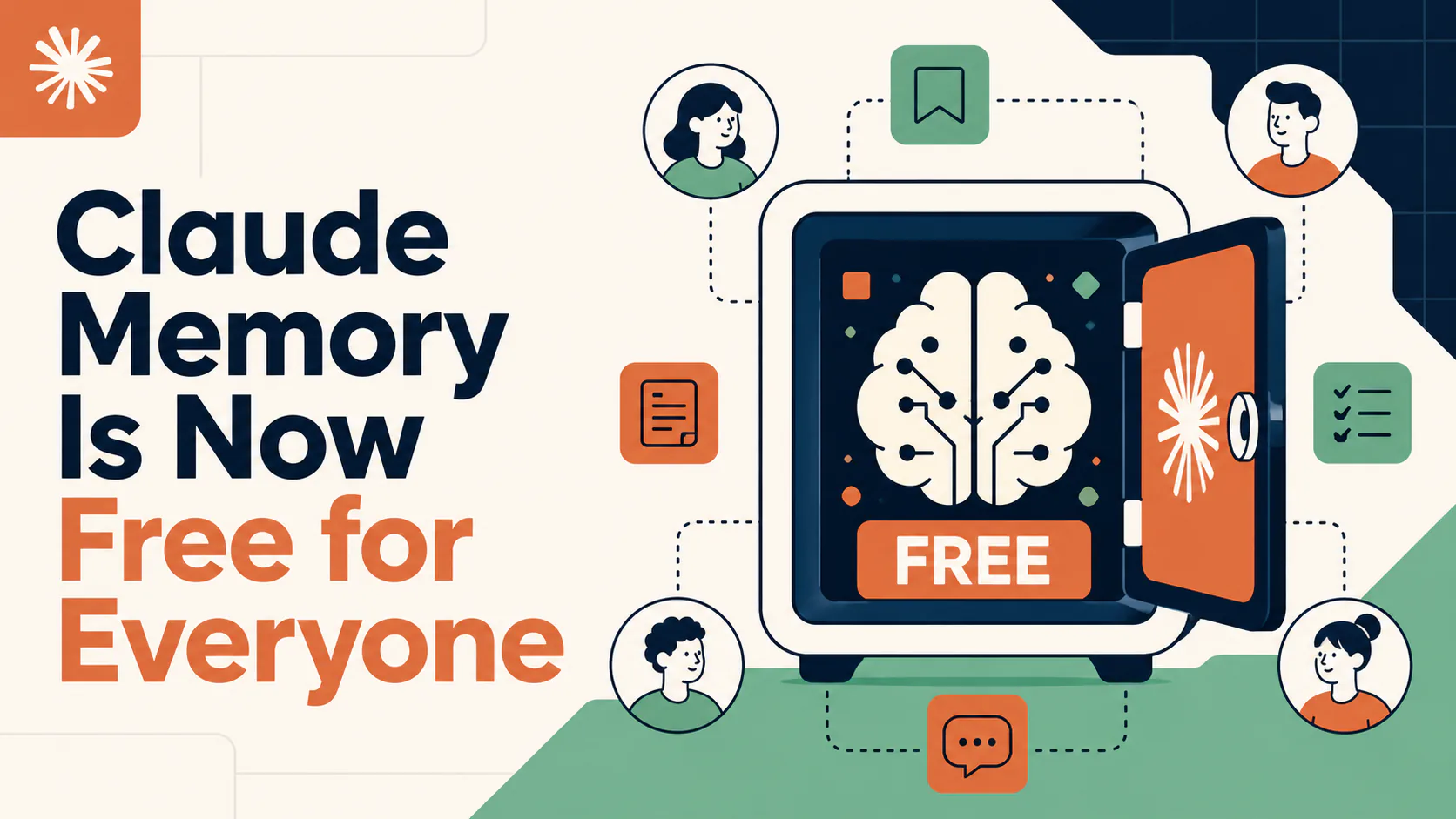
For most of 2025, if you wanted Claude to remember you, you paid for a Pro subscription or repeated yourself every session. That changed on March 2, 2026, when Anthropic extended persistent memory to every Claude user, including the free tier.
The rollout skipped a major announcement. It matters anyway. Here is what actually changed, how the feature works under the hood, and whether it holds up against what ChatGPT and Gemini already offer.
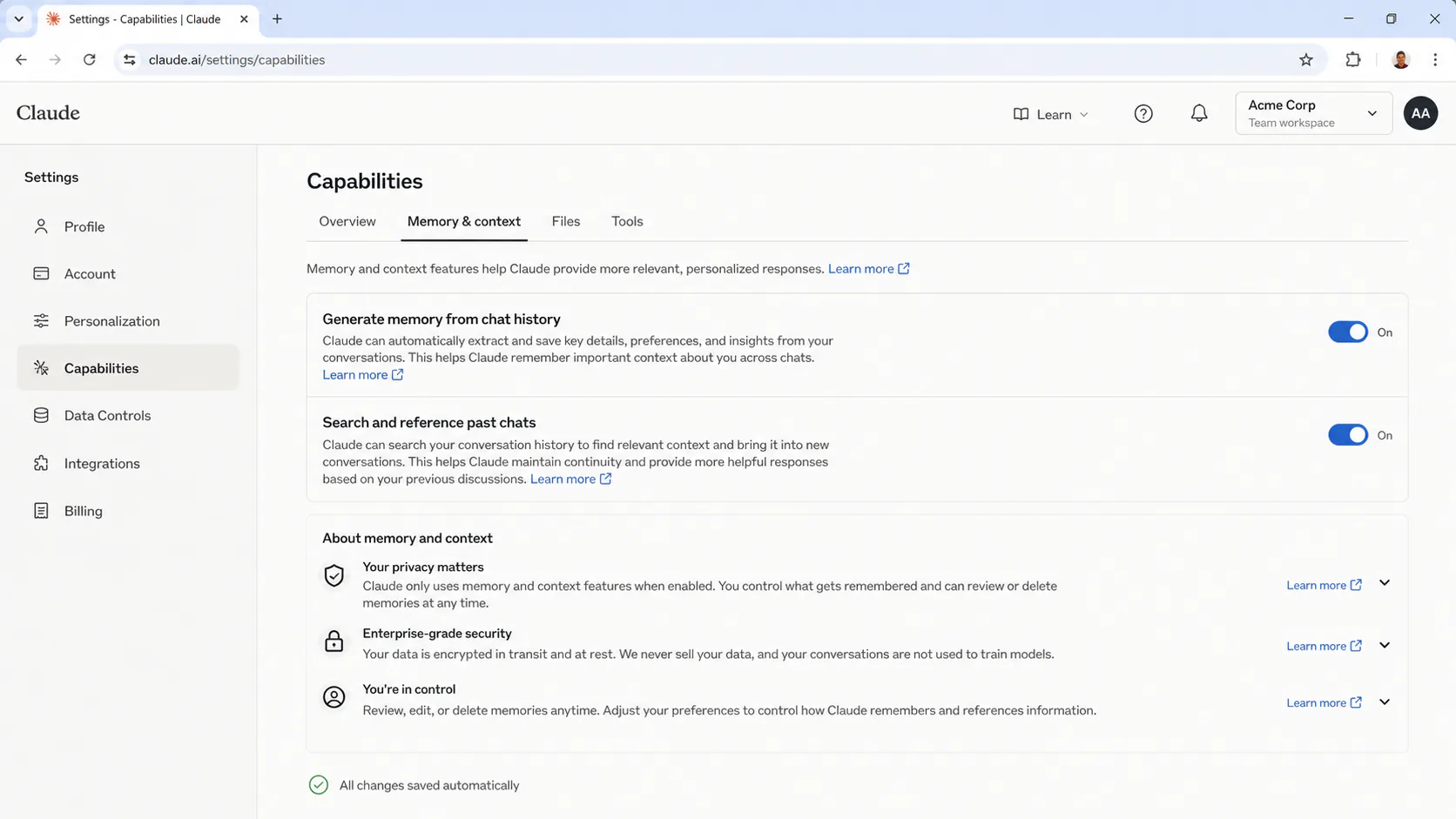
Quick setup: Go to Settings > Capabilities and toggle on "Generate memory from chat history" and "Search and reference past chats." That is all it takes on any plan.
What Changed: Claude Memory Rolls Out to Every User
Anthropic shipped persistent memory in three phases. Team and Enterprise accounts got automatic memory (no explicit user request needed) in August 2025. Pro and Max subscribers gained access in late October 2025. Free tier users joined on March 2, 2026.
The word "automatic" is doing real work in that timeline. The original implementation required you to tell Claude what to remember. The current version synthesizes your conversations on its own, on a roughly 24-hour cycle, and carries that context into every future standalone session.
How Claude Memory Actually Works
Claude memory does not log your conversations verbatim. It runs a synthesis pass over your chat history and builds a structured summary: your role, tool preferences, recurring projects, and communication style. That summary updates roughly every 24 hours and gets injected as context into every new standalone conversation.
You can also trigger an immediate update. Tell Claude "remember that I use TypeScript, not JavaScript" mid-conversation, and your memory summary updates on the spot without waiting for the overnight cycle.
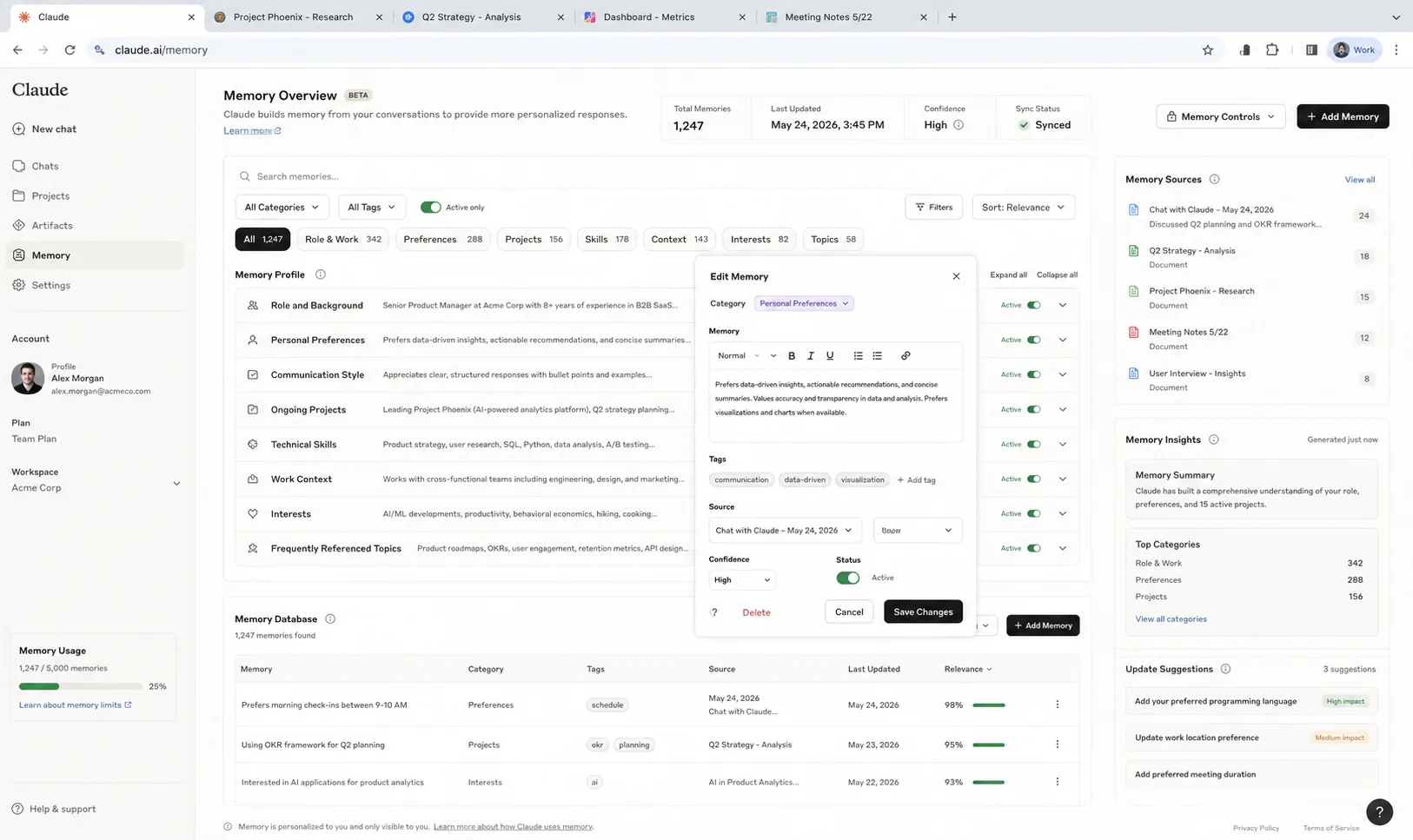
To see exactly what Claude has stored, go to Settings > Capabilities and click "View and edit memory." Every entry is readable and editable. You can add facts manually, correct misremembered details, or delete specific entries. There is also a Pause option that stops new synthesis while keeping existing memory intact, and a Reset option that permanently wipes everything. Anthropic's official memory support page covers all controls in detail.
Incognito chats are available on every plan. A ghost icon in the top-right corner of any new conversation starts a session that is never synthesized into memory.
Your past conversations (standalone chats)
             |
   [24-hour synthesis cycle]
             |
     Memory summary
  (stored on Anthropic servers,
    editable at any time)
             |
  ┌──────────┴───────────┐
  |                      |
Standalone chats      Project chats
(global memory        (own separate
context injected)     memory space)
Each Project keeps its own memory space separate from the global pool, so your coding context does not bleed into your personal writing sessions. That separation is intentional.
Claude Memory vs ChatGPT and Gemini
The three major AI assistants store memory in structurally different ways, and those differences shape what you can reasonably expect.
Claude produces a coherent narrative summary. Open the memory panel and you can understand in 30 seconds what Claude knows about you. The tradeoff: the summary is an interpretation, not a transcript. Nuance gets compressed in the synthesis.
ChatGPT accumulates memory as a flat list of discrete fact snippets, each concrete and auditable, but the list grows unwieldy over time. OpenAI also ships a background consolidation process (informally called Dreaming) that synthesizes patterns across old conversations. ChatGPT can reference specific exchanges from months ago, not just compressed summaries.
Gemini takes a different angle entirely. Its Personal Intelligence feature connects to your Google account, giving it access to Gmail, Drive, Docs, and Sheets. It can answer questions about your actual digital life without you ever explicitly telling it anything.
Claude's memory is the most transparent of the three. What it stores, you can read, edit, and delete. What it cannot do is reach into your other tools or share context with teammates.
What Claude Memory Still Cannot Do
Claude memory is genuinely useful for solo, personal workflows. Three structural limits remain that no subscription tier resolves.
First, it is a summary, not a log. Claude decides what matters and how to phrase it. If you need precise recall of specific wording, exact decisions, or the reasoning chain behind a choice, the synthesized summary is not a reliable record.
Second, memory is personal, not shared. There is no team-level memory layer. Every person on a team maintains an independent profile, with no mechanism to pool context or compound knowledge across colleagues.
Third, memory is locked to Claude. Anthropic supports importing memory from ChatGPT, Gemini, and Grok. Exporting to other platforms is not currently an option. The longer you use Claude's memory, the higher the switching cost to any other AI tool becomes.
Privacy note: Consumer Claude accounts (Free, Pro, Max) are not HIPAA compliant. If you handle regulated health data, use Enterprise with a signed Business Associate Agreement. Consumer accounts also store memory data for up to five years when you opt into training.
For a different approach to persistent AI context, see how Microsoft Copilot ContextIQ grounds memory in your Microsoft 365 files and meetings rather than synthesizing a personal profile. And if you are building Claude-powered tools that need structured per-user memory at the API level, the MCP server tutorial covers how the API Memory Tool fits into a broader agent architecture.
Should You Turn Claude Memory On?
Yes. The friction of re-introducing yourself every session is real, and enabling memory is a single toggle. Even when the synthesis misses something, the baseline context it provides beats starting cold.
If you have sensitive workflows, use Projects for scoping (each Project keeps its own memory space) and incognito mode for anything you do not want synthesized. Enterprise admins can disable memory synthesis for their entire organization from Organization Settings.
The bigger picture: persistent memory is now table stakes for AI assistants. Claude reaching parity on the free tier removes one of the clearest reasons users migrated to ChatGPT. Whether Claude's transparent, editable summary format wins out over ChatGPT's granular fact list depends on how you actually work, but either beats the stateless experience that defined AI chat for the past three years.
Frequently asked questions
Yes. As of March 2, 2026, Chat Memory (automatic 24-hour synthesis across standalone conversations) is available on all Claude plans, including the free tier. Chat Search (semantic search across past conversations) remains a paid-only feature on Pro, Max, Team, and Enterprise plans.
Claude synthesizes key context from your conversations: your name, role, tool preferences, communication style, and recurring project details. It does not store verbatim transcripts. The AI decides what is worth keeping, which means fine-grained reasoning chains and specific decision histories are usually compressed out of the summary.
Yes. Anthropic supports importing memory from ChatGPT, Gemini, and Grok. Imports transfer summarized context, not full conversation transcripts. Exporting from Claude to other platforms is not currently supported, so context built inside Claude stays there.